How to Attract Bluebirds to Your Yard
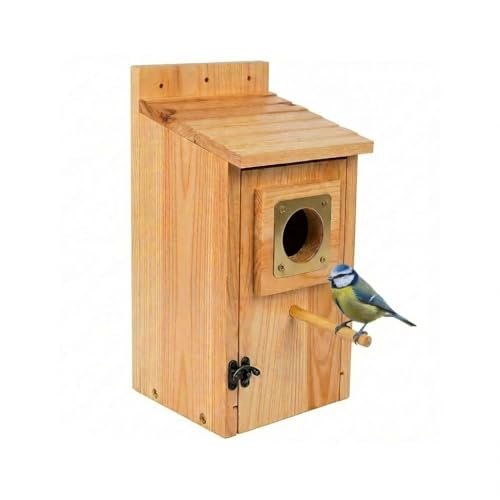
Bluebirds are open-country nesters: they want a box with the correct hole size sitting out in mowed lawn or pasture, not tucked into the woods, and they respond fast to mealworms as a protein boost during nesting season. A box built with the guard already in place, like the Nature's Way Cedar Bluebird House with Predator Guard, removes one of the two biggest reasons a bluebird box fails: predation.

What kind of nest box do bluebirds need?
| Feature | Bluebird requirement |
|---|---|
| Entrance hole (eastern bluebird) | 1 1/2 in round |
| Mounting height | 4 to 6 feet |
| Habitat | Open lawn, pasture or field edge, not deep woods |
| Spacing from same species | At least 100 feet, ideally closer to 300 feet |
| Predator guard | Baffle or guard on the pole, bottom edge 4 to 5 feet up |
The hole size matters more than almost any other feature: a hole cut larger than 1 1/2 inches lets starlings compete for the cavity, and a smaller hole shuts bluebirds out entirely. See the full nest box hole size chart for other cavity-nesting species.
Where should a bluebird box go?
Open lawn or field, mounted on a smooth pole at least 100 feet from the nearest tree line, so climbing predators cannot leap or scramble across from nearby branches. Face the entrance away from prevailing wind and afternoon sun where the layout of the yard allows it.
Do mealworms actually attract bluebirds?
Yes, live or dried mealworms are one of the fastest ways to bring bluebirds into view, since insects make up most of their diet during nesting season. Offer them in a shallow dish or a dedicated mealworm feeder near the nest box.
Kaytee Mealworms for Bluebirds or bulk I LOVE WORMS Dried Mealworms both work, and a pair feeding young will often make repeated trips to a reliable mealworm source once they learn it is there.
Should you put up more than one box?
Pairing a bluebird box with a second box 15 to 20 feet away lets tree swallows use the second box without evicting the bluebirds, since the two species tolerate that spacing far better than two bluebird pairs competing for one hole. A Gtongoko 2 Pack Bluebird House with Metal Predator Guard is an easy way to set up a paired box from the start rather than buying two separate models.
Gear for this job
Prices move constantly; the button shows the current figure.


How do you keep house sparrows out of a bluebird box?
House sparrows are not native and will kill bluebird eggs and nestlings to take over a box. Check boxes weekly during nesting season and remove sparrow nests, loose grass and trash that looks distinct from a bluebird's neat cup nest, before eggs appear. A sparrow-resistant box design is worth considering if sparrows are a persistent problem in the area, since some designs make the cavity less appealing to sparrows specifically.
What predators threaten a bluebird box and how do you stop them?
Raccoons, snakes and outdoor cats are the main threats. A stovepipe or cone baffle on a smooth metal pole, mounted well below the box, blocks nearly all of them, while a box on a tree trunk or wooden post gives every one of those predators an easy climbing route straight up.
When should a bluebird box go up and how often is it checked?
Mount boxes before early spring so pairs can find them while they are still scouting territory. Check weekly through the nesting season to monitor for sparrows, wasps or mites, and clean out the old nest after each brood fledges, since bluebirds often raise a second brood in the same box within a single season. A box like KraAra Bird House with Copper Predator Guard makes a good second station for a small bluebird trail once the first box is established.
What you need
Prices move constantly; the button shows the current figure.

Get the printable checklist
One page with every item, the placement distances and the cleaning schedule. We send it once. No sales sequence.
Used only to send the checklist.Frequently asked questions
What attracts bluebirds to a yard?
Bluebirds respond to open lawn or field habitat, a correctly sized nest box with a 1 1/2 inch entrance hole mounted 4 to 6 feet up, and mealworms offered nearby as a protein supplement during nesting season. They avoid dense woods and prefer mowed grass or pasture where they can spot insects on the ground from a low perch.
Do mealworms really bring bluebirds to a feeder?
Yes. Insects make up most of a bluebird's diet, especially while feeding young, so live or dried mealworms offered in a shallow dish near the nest box are one of the fastest ways to draw repeat visits. A pair raising a brood will often make frequent trips once they learn the mealworms are reliably there.
How far should a bluebird box be from trees?
Keep it out in the open, at least 100 feet from the nearest tree line, since bluebirds prefer field and lawn habitat over wooded edges, and nearby trees also give climbing predators like raccoons and snakes an easier route to the box. A smooth metal pole with a baffle well below the box adds another layer of protection.
How do you stop house sparrows from taking over a bluebird box?
Check the box weekly once nesting season starts and remove any sparrow nest, a loose pile of grass and trash that looks different from a bluebird's neat cup nest, before eggs are laid. House sparrows are not native and will kill bluebird eggs and nestlings to claim the cavity, so early and repeated nest checks are the main defense.
How many bluebird boxes should one yard have?
One is enough to start, but pairing it with a second box 15 to 20 feet away lets tree swallows use the extra cavity instead of competing with the bluebirds for the same hole. Space any additional bluebird-only boxes at least 100 feet apart, since bluebird pairs are territorial and will not tolerate a rival nest that close.