Binocular specs chart for birding
Exit pupil is objective divided by magnification. Twilight factor is the square root of magnification times objective and describes detail visible in dim light. Relative brightness is the exit pupil squared. These are pure geometry, true for every binocular with those numbers.

| Config | Exit pupil (mm) | Twilight factor | Relative brightness | Best for |
|---|---|---|---|---|
| 6x30 | 5 | 13.42 | 25 | Light all-round birding |
| 7x35 | 5 | 15.65 | 25 | All-round birding, woodland |
| 7x42 | 6 | 17.15 | 36 | All-round birding, woodland |
| 8x25 | 3.13 | 14.14 | 9.77 | Pocket and travel |
| 8x32 | 4 | 16 | 16 | Light all-round birding |
| 8x42 | 5.25 | 18.33 | 27.56 | All-round birding, woodland |
| 8.5x42 | 4.94 | 18.89 | 24.42 | All-round birding, woodland |
| 10x25 | 2.5 | 15.81 | 6.25 | Pocket and travel |
| 10x32 | 3.2 | 17.89 | 10.24 | Open country, shorebirds, hawks |
| 10x42 | 4.2 | 20.49 | 17.64 | Open country, shorebirds, hawks |
| 10x50 | 5 | 22.36 | 25 | Open country, shorebirds, hawks |
| 12x50 | 4.17 | 24.49 | 17.36 | Distance, with support |
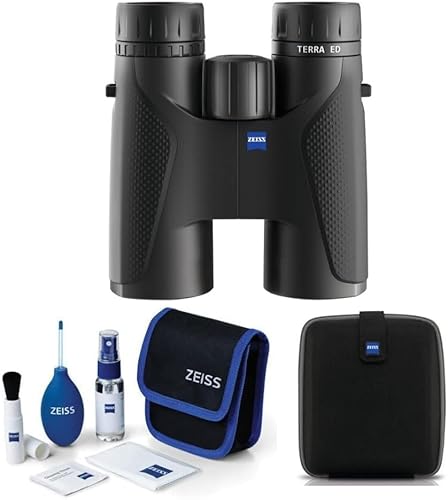
Birding binoculars in these configurations
Prices move constantly; the button shows the current figure.


Enter any binocular's numbers into the binocular calculator, including its field of view.
Get the printable checklist
One page with every item, the placement distances and the cleaning schedule. We send it once. No sales sequence.
Used only to send the checklist.Frequently asked questions
What is a good exit pupil for bird watching?
Around 4 to 5.5 mm suits most birding. An 8x42 at 5.25 mm stays bright at dawn, dusk and under forest canopy. A 10x42 at 4.2 mm is still comfortable in most light. Pocket binoculars with 3 mm or less are fine in daylight but dim noticeably in shade, which is when many birds are most active.
What is twilight factor on binoculars?
Twilight factor is the square root of magnification multiplied by objective diameter. It indicates how much detail you can resolve in low light, with higher numbers meaning more detail. An 8x42 scores 18.3 and a 10x42 scores 20.5. It favours magnification, so it should be read alongside exit pupil, which favours brightness.
Is 8x32 or 8x42 better for birding?
An 8x42 is brighter, with a 5.25 mm exit pupil against 4.0 mm, which helps in shade and at dawn. An 8x32 is lighter and more compact, easier to carry all day and often has a wider field of view. For most backyard and daylight birding, an 8x32 is enough; for early mornings and dense woods, 8x42 is the safer pick.
Are compact binoculars good for bird watching?
Compact 8x25 or 10x25 binoculars are fine for casual birding in good light and are easy to carry when travelling or hiking. Their small exit pupil makes them dim in shade and at dawn, and their narrow field of view makes finding moving birds harder. As a main birding binocular, a full-size 8x42 or mid-size 8x32 is better.
Why do birders prefer 8x over 10x?
An 8x binocular shows a wider field of view, which makes it easier to find a bird that has just moved, and it magnifies hand shake less, so the image looks steadier. It is also brighter for the same objective size. Birds in backyards and woodland are usually close, so the extra reach of 10x matters less than speed and steadiness.