How to Choose Binoculars for Bird Watching
Binoculars for bird watching are described by two numbers, like 8x42: magnification first, objective lens diameter in millimeters second. The Vortex Diamondback HD 8x42 sits at the magnification and objective size most birders settle on, since 8x42 balances brightness, field of view, and steady handholding better than higher-power options.

What magnification is best for bird watching?
Eight power is the most common recommendation for general birding. At 8x, small hand movements are magnified less than at 10x or 12x, so the image stays steadier without a tripod, and the field of view is wider, which makes it easier to find a bird that just moved in dense foliage. Ten power gives more reach for open habitats like shorelines or hawk watches, at the cost of a narrower field of view and more visible hand shake.
Twelve power and higher, such as a 12x50 pair, pushes hand shake far enough that many people find a tripod or at least a chest harness necessary for a steady view. That extra reach suits a fixed watching spot, like a window overlooking a feeder station or a hawk-migration lookout, better than active birding on foot through varied habitat.
Are 10x42 binoculars good for bird watching?
Yes, 10x42 binoculars like the Vortex Diamondback HD 10x42 work well for birders who spend more time in open country or want extra reach on distant birds. The tradeoff is a narrower field of view, which makes tracking a fast-moving bird through foliage harder, and more visible shake from hand movement at the higher magnification. Birders who split time between woodland and open habitat often prefer 8x42 as the more forgiving all-around choice.
Neither option is objectively better across the board, which is why comparing the two side by side against your own typical habitat matters more than following a blanket recommendation. See the full 8x42 versus 10x42 comparison for a closer look at field of view, brightness, and weight differences between the two.
What does 8x42 actually mean, and why is it the birding standard?
The first number is magnification, the second is the objective lens diameter in millimeters. Exit pupil, the bright circle of light you see when holding binoculars at arm's length, equals objective diameter divided by magnification. An 8x42 pair produces a 5.25 mm exit pupil, while a 10x42 pair produces 4.2 mm. A larger exit pupil generally means a brighter image in low light, which matters at dawn and dusk when many birds are most active, and it is a major reason 8x42 remains the reference point for birding binoculars.
Field of view, usually listed in feet at 1,000 yards, is the other number worth comparing directly on any spec sheet. A wider field of view makes it easier to relocate a bird after lowering the binoculars for even a moment, which happens constantly while birding in brushy or wooded habitat. Magnification and field of view move in opposite directions as a rule, which is the core tradeoff behind the whole 8x versus 10x question. Use the binocular chooser calculator to weigh magnification, objective size, and your typical habitat together instead of guessing from spec numbers alone.
How do you choose binoculars for bird watching if you wear glasses?
Look for long eye relief, listed in the specifications, and twist-up or fold-down eyecups that let you set the eyecup shorter to compensate for the extra distance your glasses put between your eye and the lens. Without enough eye relief, a glasses wearer sees a narrowed, vignetted field of view instead of the full image. Models built around comfortable eye relief for glasses wearers, like the Nikon Prostaff P3 8x42, are worth prioritizing over a pair chosen on magnification and price alone.
Gear for this job
Prices move constantly; the button shows the current figure.


Compact vs full-size binoculars: which should a birder choose?
A compact pair like the Nocs Provisions Standard Issue 8x25 is far easier to carry on a hike or keep in a bag for spontaneous birding, but the smaller 25mm objective lens produces a smaller exit pupil than a 42mm pair at the same magnification, which shows up as a dimmer image at dawn, dusk, or in shaded woods. Full-size 42mm binoculars stay the better everyday choice for serious birding, with compacts as a lightweight second pair for travel. See the best compact binoculars for birding for models that balance portability against the low-light tradeoff reasonably well.
For birders who eventually want more reach than any handheld binocular offers, such as identifying a distant shorebird or raptor at long range, a spotting scope on a tripod fills that gap, though it trades portability and quick target acquisition for magnification. See binoculars versus a spotting scope for when the added weight and setup time of a scope is worth it.
What is a good budget option that still performs well?
The Celestron Nature DX 8x42 covers the fundamentals well at a lower price than premium glass: correct 8x42 specification, waterproof construction, and a wide enough field of view for general birding. Premium optics add brighter, sharper images at the edges of the field and better performance in very low light, but a birder just starting out gets most of the practical benefit from a well-specified 8x42 at a moderate price.
Waterproofing and fog-proofing, both listed in the specifications of most modern binoculars, matter more for birding than they might seem at first. Birding happens in early morning dew, sudden rain, and cold mornings where internal fogging is common on cheaper, unsealed optics. A nitrogen or argon-purged, waterproof design at a moderate price point holds up through those conditions far better than an unsealed pair, regardless of how sharp the glass looks on a clear, dry afternoon in a store.
Do you need a harness strap for birding binoculars?
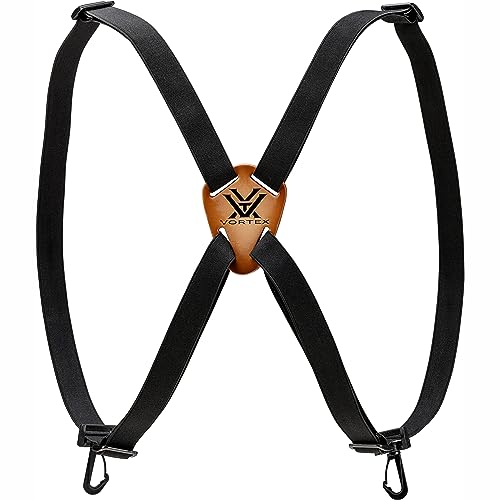
A harness strap, such as the Vortex Binocular Harness Strap, spreads the weight of a full-size 42mm pair across the shoulders instead of the back of the neck, which matters on a longer walk or a full morning of birding. A basic neck strap works fine for shorter outings, but anyone carrying binoculars for hours at a time typically finds a harness far more comfortable.
Binocular specs at a glance
| Spec | 8x42 | 10x42 | 8x25 compact |
|---|---|---|---|
| Exit pupil | 5.25 mm | 4.2 mm | 3.1 mm |
| Field of view | Widest | Narrower | Narrow |
| Low-light brightness | Best | Good | Dimmer |
| Weight and pack size | Moderate | Moderate | Smallest |
What you need
Prices move constantly; the button shows the current figure.


Get the printable checklist
One page with every item, the placement distances and the cleaning schedule. We send it once. No sales sequence.
Used only to send the checklist.Frequently asked questions
What magnification is best for bird watching?
Eight power is the standard recommendation for general birding, since it stays steady in hand and gives a wide field of view that makes it easier to find a bird that just moved. Ten power adds reach for open habitat like shorelines but narrows the field of view and shows more hand shake. Most birders find 8x the more forgiving everyday choice across mixed habitat.
Are 10x42 binoculars good for bird watching?
Yes, they work well for open habitats and longer-distance viewing, trading a narrower field of view and more visible hand shake for extra reach compared to 8x42. A birder who mostly watches shorelines, fields, or hawk migration may prefer the extra magnification, while someone in mixed woodland and open country often finds 8x42 easier to use day to day.
What does the exit pupil number mean on binoculars?
Exit pupil equals the objective lens diameter divided by the magnification, and it predicts how bright the image looks in dim light. An 8x42 pair produces a 5.25 mm exit pupil, and a 10x42 pair produces 4.2 mm. A larger exit pupil generally gives a brighter view at dawn, dusk, and in shaded woods, which is one reason 8x42 remains the common birding recommendation.
What binoculars work best with glasses?
Look for binoculars with long eye relief and twist-up or fold-down eyecups, which let a glasses wearer set the eyecups shorter to compensate for the extra distance glasses add between eye and lens. Without enough eye relief, glasses wearers see a narrowed, vignetted image instead of the full field of view, no matter how good the optics otherwise are.
Are compact binoculars good enough for bird watching?
Compact 8x25 binoculars are genuinely useful for travel and hiking because of their light weight, but their smaller objective lens produces a dimmer image than a full-size 8x42 pair, especially at dawn, dusk, or in shaded woods. Most birders keep a full-size pair as their primary binoculars and treat a compact pair as a lightweight second option for travel.