How to Clean a Bird Feeder
Regular cleaning is what actually prevents Salmonella and mold buildup at a bird feeder, not the feeder material or design. A long-handled brush set like the Holikme Bottle Brush Tube Cleaning Set reaches into narrow feeder tubes that a sponge or cloth cannot clean effectively.

How often should you clean a bird feeder?
Every 2 weeks is the standard schedule for seed feeders under normal conditions. Switch to weekly cleaning during extended wet weather, since damp seed molds fast, or immediately during any local reported disease outbreak among songbirds, since a contaminated feeder can spread illness between birds that share it.
Watch for visible warning signs between scheduled cleanings too: caked or clumped seed at the bottom of a hopper or tube, a greenish or black film on plastic ports, or seed hulls piling up wet underneath the feeder. Any of these is a reason to clean early rather than waiting out the rest of the normal 2-week interval, since visible buildup usually means the disease and mold risk is already ahead of the calendar schedule.
A feeder that many birds visit each day, or one placed close to other feeders in a busy station, tends to accumulate droppings and hulls faster than a single feeder in a quiet corner of the yard, and it is worth cleaning the busiest feeder in a multi-feeder setup on the shorter end of the schedule even if the others are due later. See bird feeder placement for how spacing feeders apart also helps limit this buildup in the first place.
What is the best bird feeder disinfectant?
A soak of 1 part bleach to 9 parts water is the standard disinfecting solution. Soak the disassembled feeder parts for a few minutes, scrub any visible residue, then rinse thoroughly with clean water. Complete drying before refilling matters just as much as the soak itself, since seed poured into a still-damp feeder starts molding almost immediately.
Work outdoors or in a well-ventilated space when mixing and using a bleach solution, and rinse feeder parts in a separate basin of clean water rather than directly under a hose, so you can confirm every surface has actually gone through both the soak and a full rinse instead of a quick splash that misses corners and seams.
How do you clean a tube or hopper feeder step by step?
- Empty all remaining seed and discard any that looks damp, clumped, or moldy.
- Disassemble the feeder as far as the design allows, separating the base, ports, and perches.
- Soak parts in 1 part bleach to 9 parts water for a few minutes.
- Scrub the inside of tubes and ports with a long-handled brush like the Holikme Bottle Brush Tube Cleaning Set, which reaches narrow tube feeders a cloth cannot.
- Rinse every part thoroughly with clean water until no bleach smell remains.
- Let all parts air dry completely before reassembling and refilling with fresh seed.
How do you clean a hummingbird feeder's narrow ports?
Narrow feeding ports and tubes need a smaller brush than a standard bottle brush can reach. A dedicated set like the Yungyan Hummingbird Feeder Cleaning Brush Kit includes several bristle sizes built specifically for the tight ports and internal reservoir shapes of hummingbird feeders. Follow the same bleach soak, scrub, rinse, and dry sequence used for seed feeders, since sugar residue left behind supports the same mold and bacterial growth.
Hummingbird feeders need cleaning on the nectar change schedule rather than the 2-week seed feeder schedule, since sugar water spoils far faster than dry seed. Clean the feeder every time you change the nectar, not on a separate calendar, so a dirty feeder never gets refilled with otherwise fresh nectar. See the full hummingbird nectar recipe and change schedule for the mixing side of this same routine.
Gear for this job
Prices move constantly; the button shows the current figure.


How do you clean a bird bath?
Empty a bird bath and scrub the basin at least twice a week, more often in hot weather when algae grows fast. A stiff bristle brush kit designed for curved basin surfaces, like the Larbeti Bird Bath Brush Kit, gets into corners a sponge misses. For a deeper disinfecting clean, use the same 1 part bleach to 9 parts water solution, rinse thoroughly, and let the basin dry before refilling. Heated baths should be kept at 2 inches deep or less regardless of cleaning schedule, for the safety of small birds.
A bird bath sitting in more sun tends to grow algae faster than one in partial shade, similar to the sun-and-shade tradeoff for feeders, so a basin in a sunnier spot may need scrubbing more often than the twice-weekly baseline even outside of hot weather. Refreshing the water itself between full scrubbings, rather than only topping it off, also slows algae buildup and keeps the water more inviting to birds in the meantime. See the best bird bath models and best heated bird baths for basin shapes that are easier to keep clean.
How do you keep seed feeders from growing mold between cleanings?
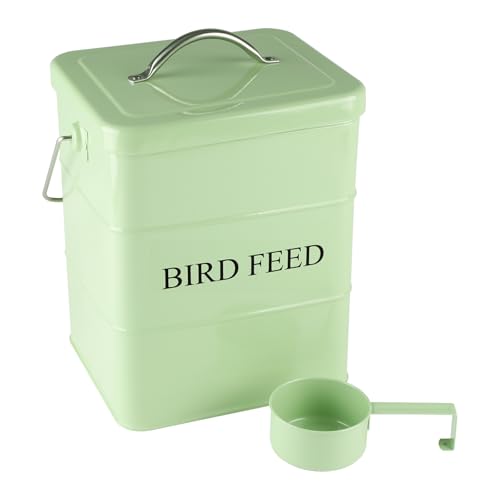
Store unused seed in an airtight container, such as the Brabtod Airtight Bird Seed Storage Container, rather than leaving an open bag exposed to yard humidity. Fill feeders with only what will be eaten within a normal cleaning cycle instead of topping off a partially full feeder repeatedly, since older seed at the bottom of a hopper or tube sits the longest and molds first.
Do you need bleach, or is soap and water enough?
Soap and water handle routine light cleaning between deeper disinfecting sessions, but only a bleach solution reliably kills the Salmonella bacteria and mold spores tied to feeder-related disease outbreaks among songbirds. Use the full bleach soak on the standard schedule, and reserve soap-and-water wipe-downs for quick maintenance in between.
| Item | Normal schedule | Disease outbreak or wet weather |
|---|---|---|
| Seed feeders | Every 2 weeks | Weekly |
| Hummingbird feeders | Every nectar change, up to every 6 days | Daily in heat above 92°F |
| Bird baths | 2 times per week | Daily in hot, algae-prone weather |
What you need
Prices move constantly; the button shows the current figure.
Get the printable checklist
One page with every item, the placement distances and the cleaning schedule. We send it once. No sales sequence.
Used only to send the checklist.Frequently asked questions
How often should I clean my bird feeder?
Clean seed feeders every 2 weeks under normal conditions, and switch to weekly during extended wet weather or any local reported disease outbreak among songbirds. Hummingbird feeders follow the nectar change schedule instead, up to every 6 days in mild weather and daily once temperatures climb above about 92 degrees Fahrenheit, since sugar water spoils faster than dry seed.
What is the best disinfectant for a bird feeder?
A soak of 1 part bleach to 9 parts water is the standard, effective disinfecting solution for both seed feeders and bird baths. Soak the disassembled parts a few minutes, scrub visible residue, rinse thoroughly until no bleach smell remains, and let everything dry completely before refilling. Skipping the full rinse or the drying step undermines the benefit of disinfecting in the first place.
How do you clean the inside of a tube bird feeder?
A long-handled bottle brush reaches down into a narrow tube feeder in a way a cloth or sponge cannot. Disassemble the feeder, soak the tube in a bleach and water solution, scrub the interior with the brush, then rinse thoroughly and let it dry completely before refilling. A dedicated brush set with multiple bristle sizes handles both wide seed tubes and narrower hummingbird feeder ports.
How often should you clean a bird bath?
Scrub a bird bath basin at least twice a week, and more often in hot weather when algae grows quickly. Empty standing water regularly between full cleanings as well, since stagnant water attracts mosquitoes and grows bacteria faster than fresh water. Heated baths in winter should also stay at 2 inches deep or less for the safety of small birds using them.
Can I just use soap and water to clean a feeder?
Soap and water is fine for light, routine wipe-downs between deeper cleanings, but it does not reliably kill the Salmonella bacteria or mold spores linked to feeder-related disease outbreaks. Use a full soak of 1 part bleach to 9 parts water on the standard 2-week schedule, with soap and water reserved for quick maintenance in between full cleanings.